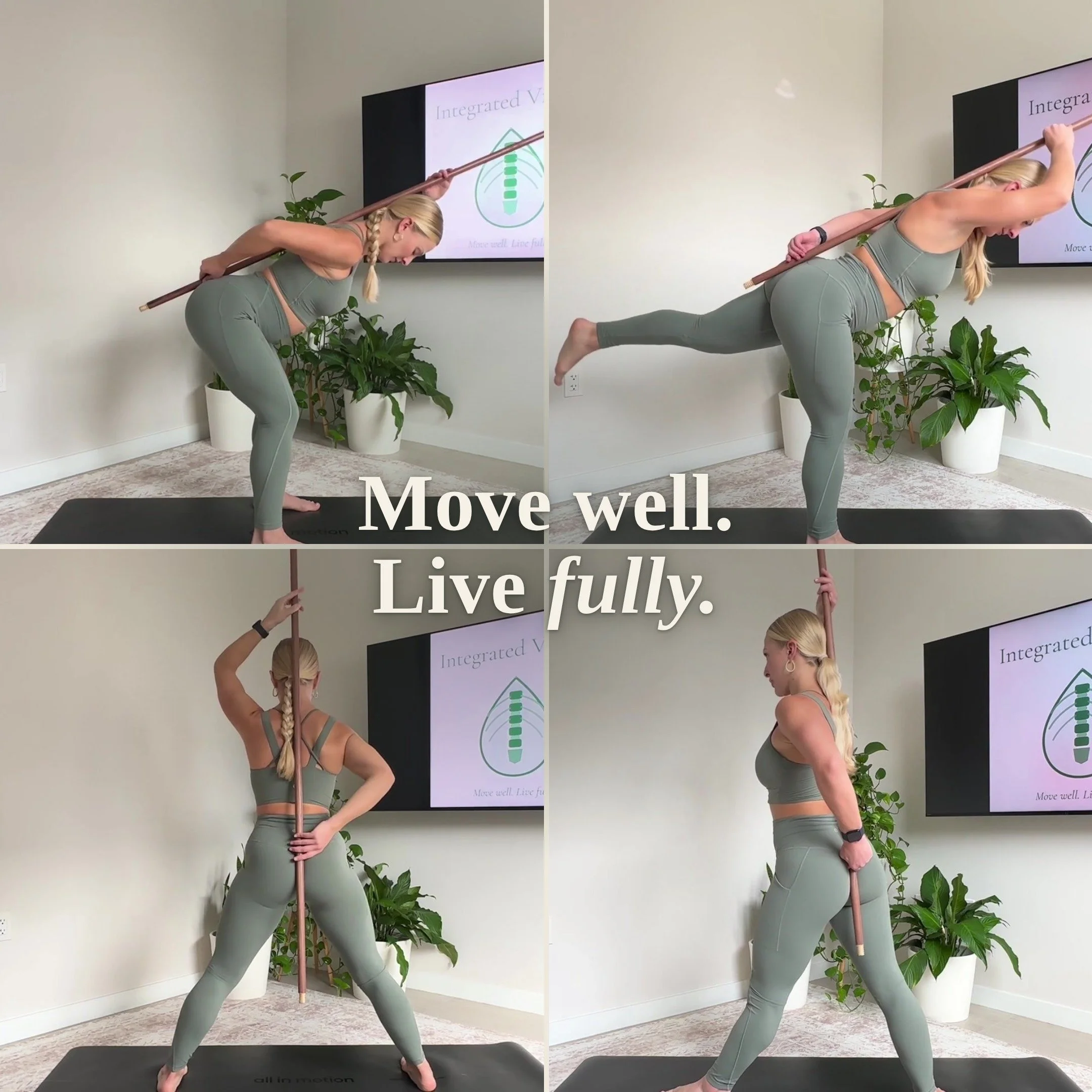
Hamstrings & Glutes Revive
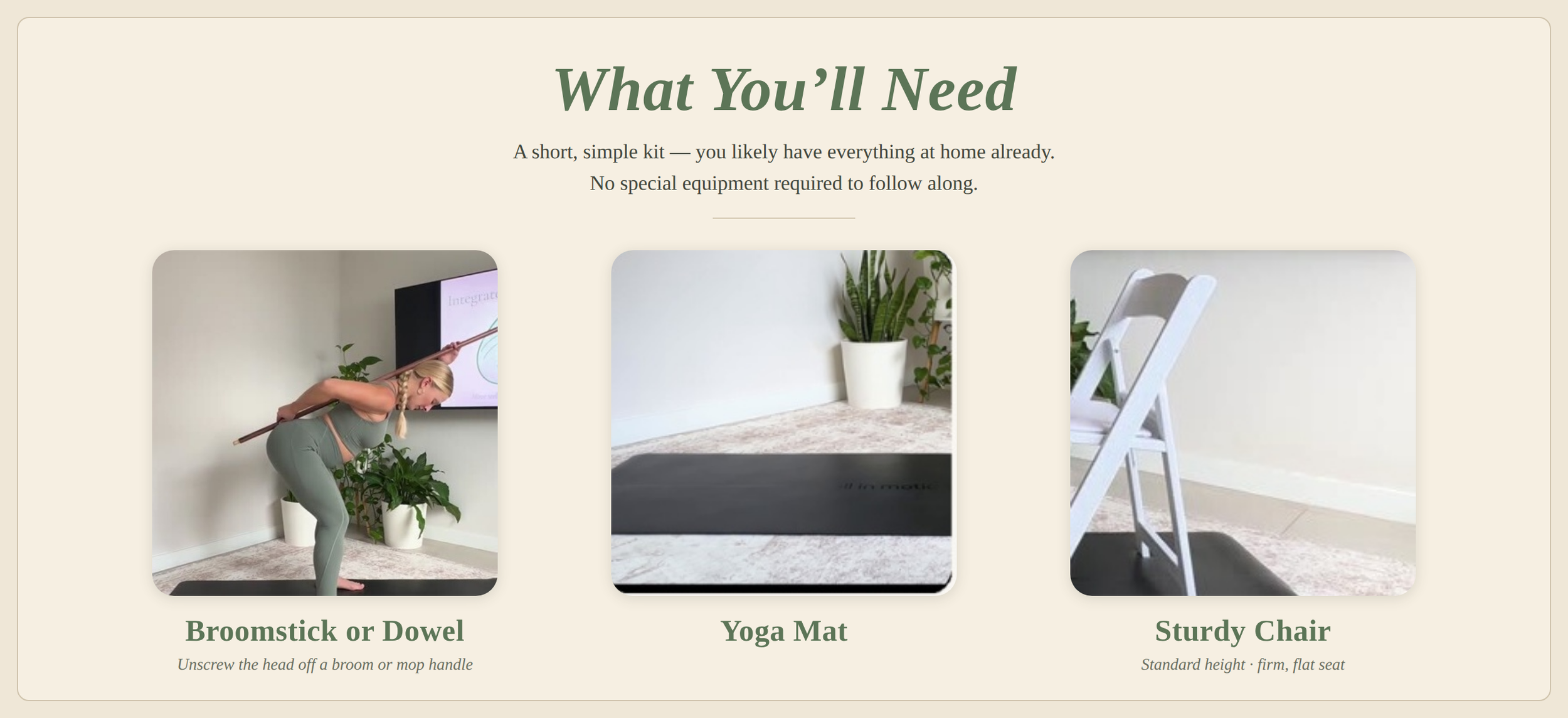
This routine rebuilds the way the hips, hamstrings, and glutes move — using a dowel held along the spine to keep three points of contact (head, mid-back, and tailbone) so every hinge, squat, and stretch is trained from a tall, neutral spine instead of a rounded low back.
WHO IT’S FOR:
anyone with tight, stubborn hamstrings, a stiff or achy low back from sitting
dancers and athletes who want cleaner hip hinges and stronger glutes.
The exercises flow from seated to standing to single-leg, warming up the pattern before layering in balance and load. Move slowly, breathe throughout, and stay within a comfortable, pain-free range — a smaller range done well builds flexibility faster than forcing depth. Recommended frequency: 3–4 times per week, about 10 repetitions of each movement. For any questions, don’t hesitate to reach out — I can’t wait to help you move from the hips and feel longer, looser, and stronger.
-
-
-
1. Seated Hip Hinge
Hinge forward from the hips in a chair, keeping all three points of contact on the dowel — the pattern that protects your low back while lengthening the hamstrings.
Hinge forward from the hips in a chair, keeping all three points of contact on the dowel — the pattern that protects your low back while lengthening the hamstrings.
-
2. Standing Hip Hinge
The same hip hinge, standing. Stop at the first stretch down the back of the leg and return — quality of movement over depth.
The same hip hinge, standing. Stop at the first stretch down the back of the leg and return — quality of movement over depth.
-
Add a knee bend; hips, knees, ankles fold and straighten together.
-
Wide, slightly turned-out stance; sink deep with knees tracking over toes.
-
5. Sumo Squat with Side-to-Side Weight Shift
Shift your weight side to side in the wide squat at a constant hip height — for hip mobility and outer-hip strength.
Shift your weight side to side in the wide squat at a constant hip height — for hip mobility and outer-hip strength.
-
6. Deadlift Hold with Side Stepping
Hold the deadlift position while stepping side to side, keeping your knees and toes pointing straight forward.
Hold the deadlift position while stepping side to side, keeping your knees and toes pointing straight forward.
-
7. Standing Hip Circles
Draw slow circles on the ceiling with the top of the dowel without losing any of the three points of contact.
Draw slow circles on the ceiling with the top of the dowel without losing any of the three points of contact.
-
8. Standing Knee Marches
Alternate knee lifts toward the chest, keeping the dowel anchored; the lift grows with practice.
Alternate knee lifts toward the chest, keeping the dowel anchored; the lift grows with practice.
-
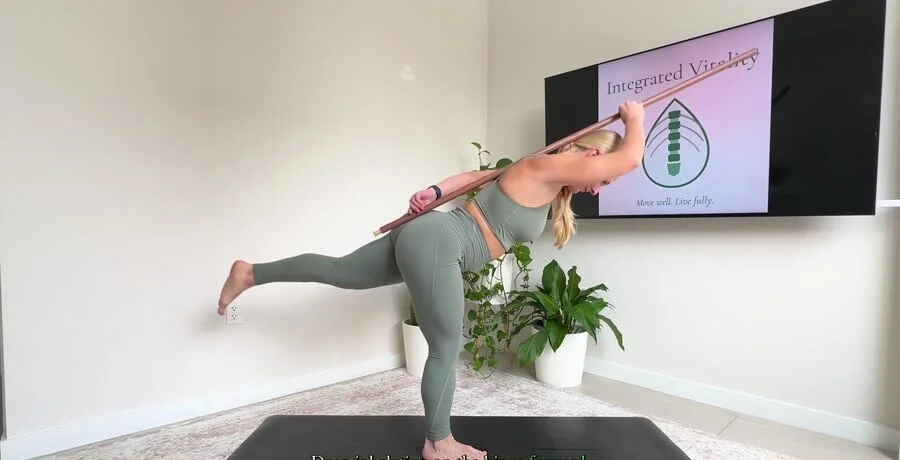
9. Standing Leg Lift
Lift a straight leg with a slightly flexed foot until you feel a stretch down the back of the leg — without rounding the low back.
Lift a straight leg with a slightly flexed foot until you feel a stretch down the back of the leg — without rounding the low back.
-
Circle the lifted kneecap, alternating sides.
-
Rise by driving through the feet, sparing the low back.
-
12. Standing Hip Flexor & Hamstring Dynamic Stretching
Foot on a chair; lean forward, then hinge back.
Foot on a chair; lean forward, then hinge back.
-
Heel on a chair to the side; hinge to stretch the inner thigh.
-
Hip hinge on one leg with a constant micro-bend.
-
Add a knee bend to the single-leg hinge.
-
Wide, turned-out flat-back fold toward one foot.
-
Your Printable Guide
A full photo summary of every exercise — key cues, common mistakes, and recommended reps — to follow along anywhere.
What You'll Learn
How to hinge from your hips instead of your low back — protecting your spine in every bend, squat, and lift
A simple dowel (or broomstick) set-up you can use at home to self-correct your alignment on every exercise
Lasting hamstring flexibility, built through active movement rather than static stretching
Real strength and control in your glutes, hips, and posterior chain
Clean, confident form on the deadlift, sumo squat, and single-leg variations
Better balance, stability, and single-leg hip mobility
Everyday carryover — sit-to-stand and daily bending powered by your legs, so tension stops collecting in your low back